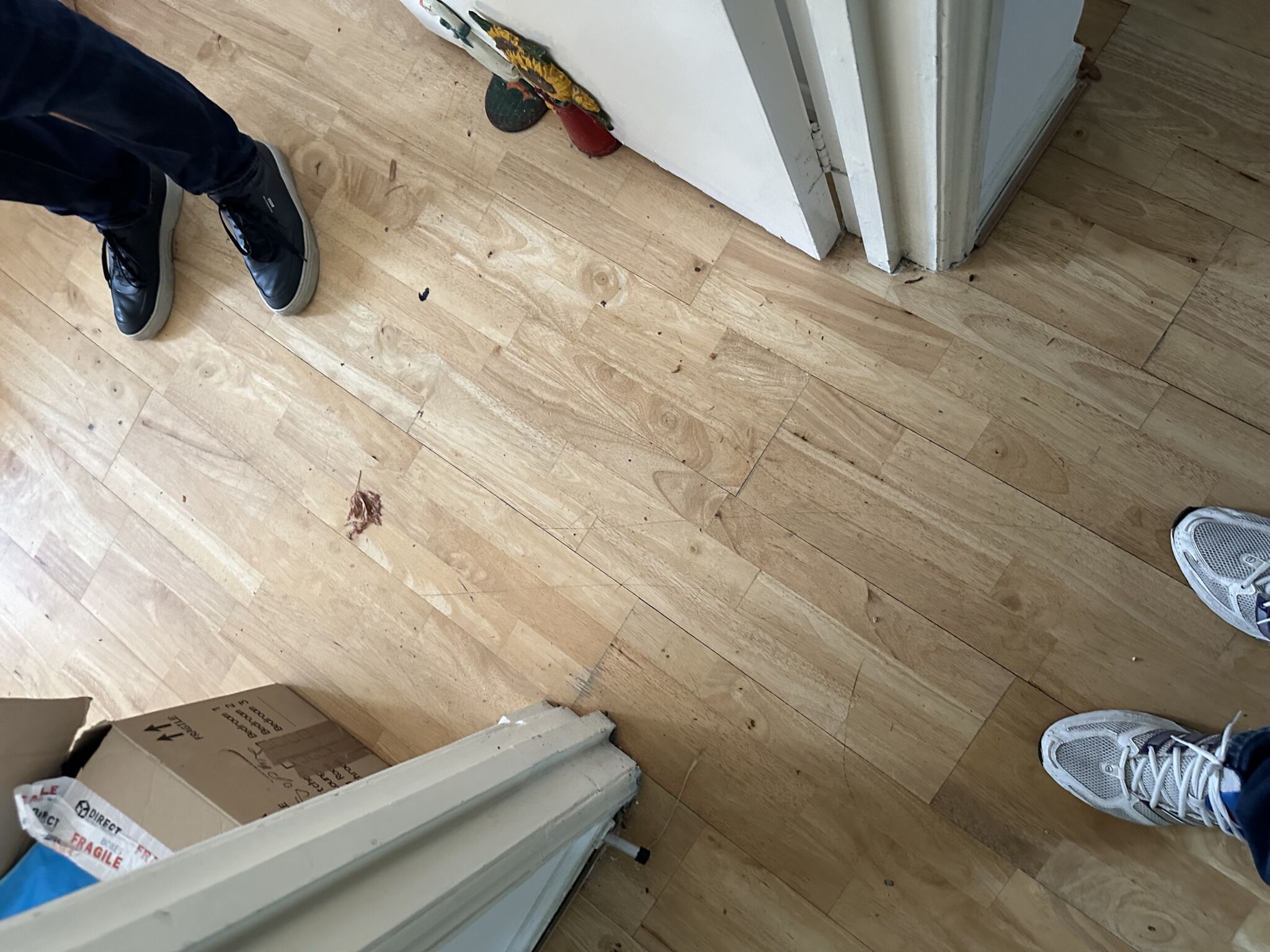
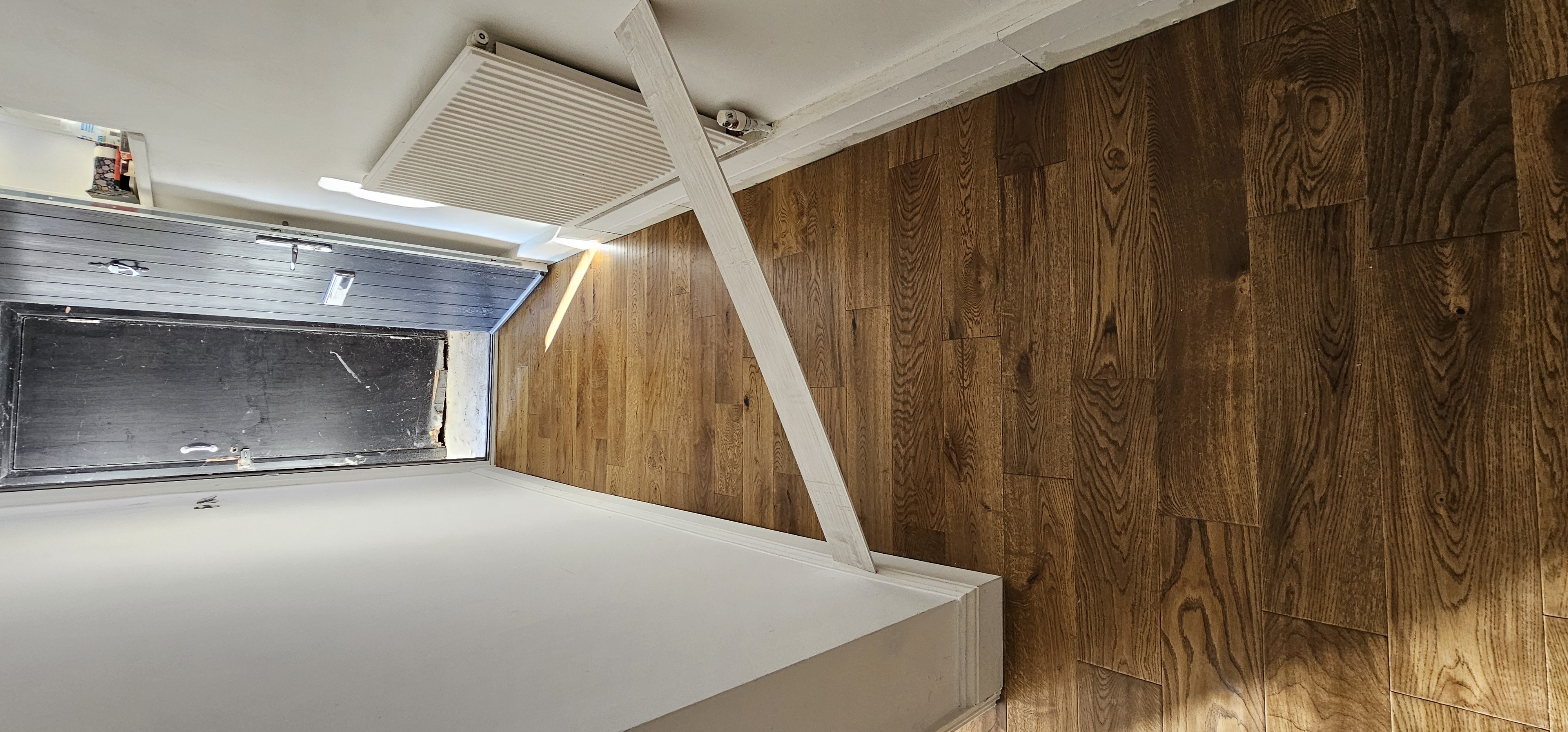
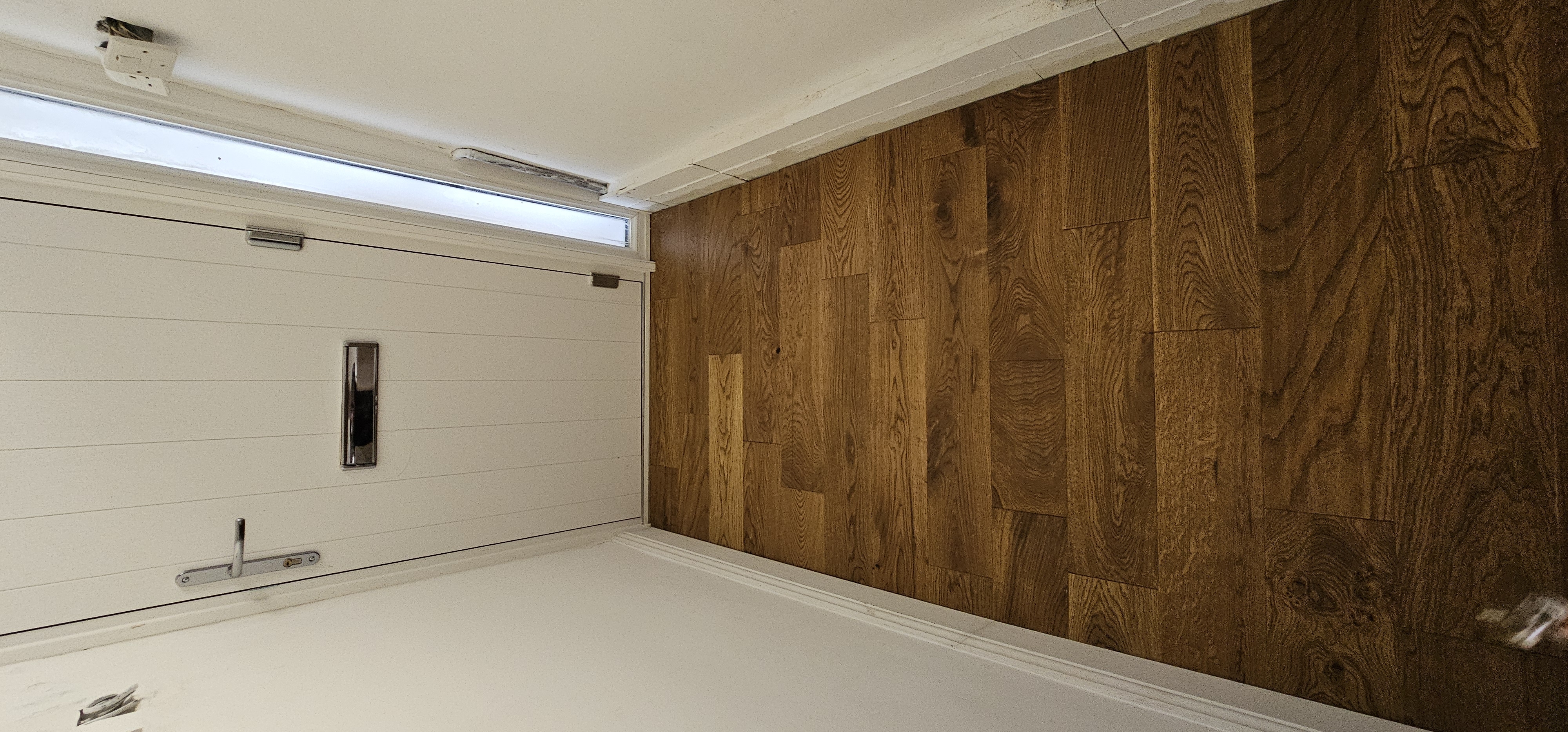
We recently completed the fitting of engineered wood flooring in a Victorian terraced property in London, E7. The client wanted a warm, durable floor that would complement their period features without requiring the extensive preparation needed for solid hardwood. We supplied and fitted approximately 45 square metres of engineered oak across the ground floor, working around existing fixtures and navigating the uneven subfloors typical of properties built in the 1890s.
Work carried out
- Site survey and floor assessment
- Subfloor preparation and levelling
- Installation of engineered oak flooring using floating method
- Fitting of matching skirting boards
- Application of protective floor finish
- Doorway threshold and transition strips
About the project
The property had concrete floors on the ground level, which meant checking moisture content before we could proceed. We recorded levels at 4.2%, well within the safe range for engineered wood. The original plaster was uneven in places, so we laid a self levelling compound to create a flat base. This step doesn't cost much but it prevents the boards moving or clicking underfoot once they're down. We left the flooring to acclimatise for 48 hours before fitting began, which is essential because timber moves with humidity changes in the London climate.
The main challenge was fitting around the existing kitchen units and fireplace without disruption to the rest of the house. We worked room by room, which meant careful planning of where joins would fall. The floating installation method we used meant no nailing or gluing to the subfloor, allowing the boards to expand and contract naturally. The job took four days from start to finish, including the time needed for the protective coating to cure properly before the client could use the rooms.
About our London, E7 service
London, E7 covers West Ham and the surrounding areas, where you'll find a genuine mix of property ages and types. The Victorian and Edwardian terraced houses that dominate the streets often have concrete or timber subfloors, usually lower than modern standards and prone to moisture if they're not properly ventilated. Newer properties in the area tend to have solid floors with damp proof membranes already in place, though conversion flats sometimes present unusual layouts where a uniform floor becomes tricky to achieve. We know E7 well and understand what each property type will need before we even visit.
Engineered flooring suits these older properties particularly well because it's more stable than solid wood when humidity fluctuates. The ground floors of many E7 homes sit close to ground level, which makes moisture management critical. We always recommend a moisture test before fitting anything, and we've learned when to recommend solid wood versus engineered products for each situation. The stone and brick construction common in the area provides a solid base once we've dealt with any levelling needed.
Frequently asked questions
How much does engineered wood flooring cost to fit?
Fitting costs range from £35 to £60 per square metre depending on the complexity of the job. Simple rectangular rooms with minimal obstacles fall toward the lower end. Properties with many doorways, fitted kitchens, or awkward layouts cost more because there's more measuring, cutting and fitting involved. Subfloor preparation, which is nearly always necessary, runs separately at £15 to £30 per square metre.
What preparation is needed before fitting can start?
We need a clean, dry, level subfloor. If you have carpet or vinyl down, that comes up first. We'll test moisture content and recommend any damp proof measures needed. Any significant dips or bumps get levelled using compound or self levelling screed. Skirting boards usually come off before we start and go back on once the floor is done. The whole preparation stage typically takes one or two days depending on the condition of your subfloor.
How long does fitting actually take?
A straightforward 40 to 50 square metre ground floor takes around three to four days. This includes acclimatisation time, which we never skip. Complex jobs with many angles, fitted kitchens, or stairs can take longer. You'll need to stay off the floor for 24 hours after fitting so the adhesive or sealant can set properly. We'll discuss the schedule at the survey stage so you know exactly when your home will be ready to use normally.